A few years ago, outdoor apparel was still largely judged by performance.
Waterproofing, wind protection, breathability, durability and weight were the obvious priorities. The harsher the environment, the easier it was to understand what the product was for.
That logic has not disappeared. But the way outdoor clothing is being worn has changed significantly.
Shell jackets, fleece, hiking pants, technical vests and trail shoes are now part of everyday city wardrobes. They show up in airports, offices, cafés and on the street, not just on trails or at campsites.
Gorpcore clearly helped move technical clothing into mainstream fashion. But this is becoming more than a trend cycle.
What is changing is the role of outdoor apparel itself.
People used to buy technical clothing because they had an outdoor activity in mind. Today, many consumers wear it simply because it works well for the way they live.
That shift matters.
Once outdoor clothing becomes part of daily life, performance is no longer the only consideration. Fit, proportion, color, texture and versatility start to matter just as much.
Why AND WANDER Is Worth Watching
AND WANDER is a useful example of where this movement is heading.
Founded in Japan by Keita Ikeuchi and Mihoko Mori, both with backgrounds at ISSEY MIYAKE, the brand has never treated fashion and function as separate ideas.
That difference is visible in the product.
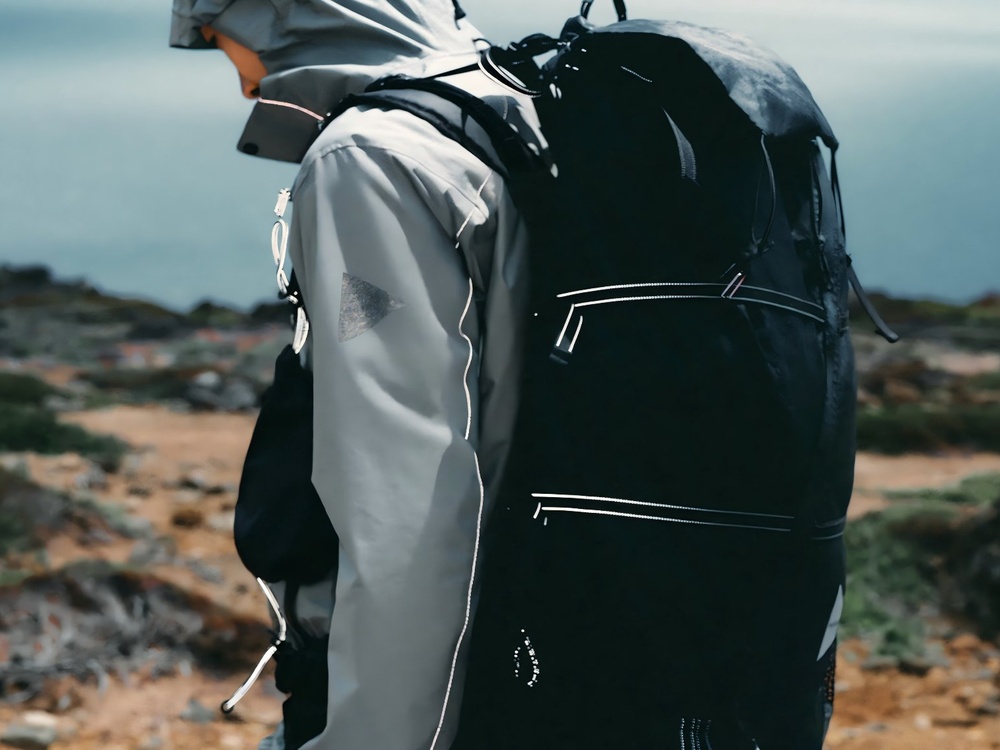
The collections still use familiar outdoor elements: lightweight technical fabrics, weather protection, reflective details, functional pockets and performance construction.
But the overall result rarely feels like conventional outdoor gear.
The silhouettes are considered. The proportions feel contemporary. Materials and colors are used with the same attention as technical features.
That is what makes AND WANDER interesting.
It is not simply making outdoor clothing look more fashionable. It is showing that technical function can become part of a brand's design language.
For the wider outdoor apparel market, that is an important distinction.
Consumers no longer need to choose between performance and appearance.
Increasingly, they expect both.
What Comes After Gorpcore?
Gorpcore made technical clothing visible.
Arc'teryx shells, Salomon footwear, Patagonia fleece and utility-driven silhouettes all became familiar well beyond the traditional outdoor market.
But the next stage may look less obvious.
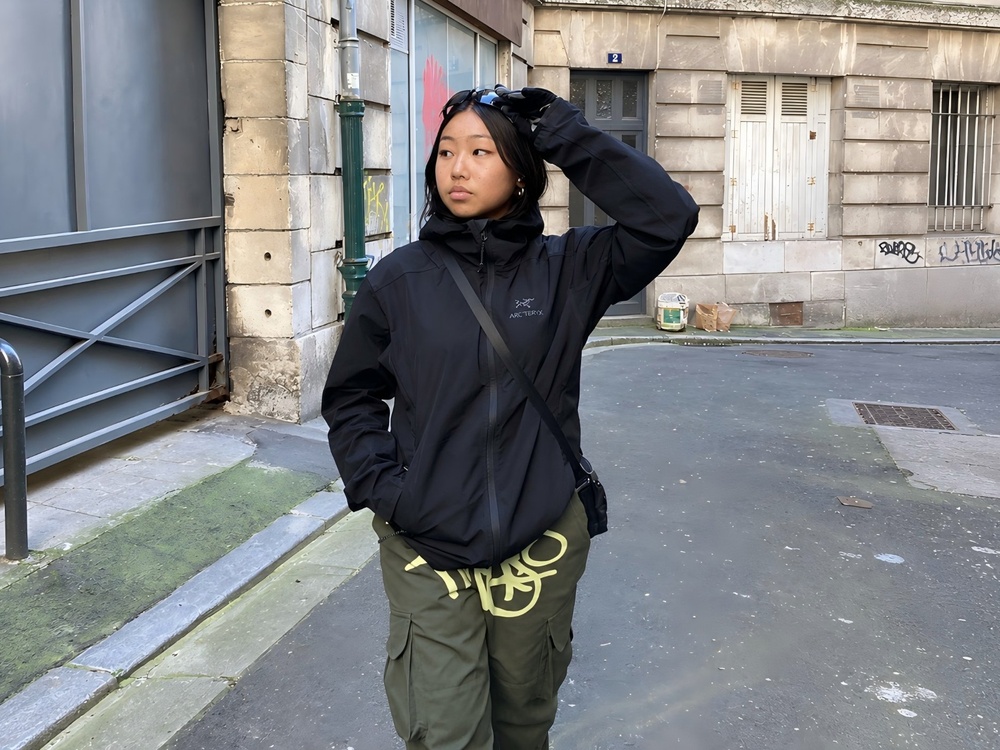
Consumers are unlikely to want every product to feel like expedition gear. In many cases, the stronger opportunity lies in clothing that works across different parts of the day without making a strong statement about where it belongs.
A lightweight jacket can work for a morning commute, an evening flight and a weekend outside the city.
That kind of flexibility is increasingly relevant to modern urban life.
Work, travel, exercise and leisure no longer sit in separate categories. The same is becoming true of clothing.
This is where the idea of Urban Outdoor becomes more meaningful.
The function remains, but it becomes quieter.
A garment may look simple at first, yet still offer wind protection, stretch, lightness, storage, mobility and comfort.
For many brands, that balance may be more valuable than adding another visible technical feature.
Function Is Becoming Part of the Design
The same shift can be seen in garment construction.
Details that once existed purely for performance are increasingly used as part of the visual identity of a product.
Taped seams, waterproof zippers, laser-cut panels, adjustable systems, articulated pockets and reflective materials all began as technical solutions.
Today, they can also help define the look of a garment.
Fabric development is moving in the same direction.
Technical textiles were once discussed mainly through numbers: waterproof ratings, breathability, weight and durability.
Those figures still matter, but they are no longer enough on their own.
Brands are also looking at hand feel, surface texture, sheen, drape and how the fabric behaves in different light.
In product development, the question is no longer just:
What can this fabric do?
It is also:
What kind of garment can this fabric create?
That is bringing fabric development, garment engineering and design much closer together.
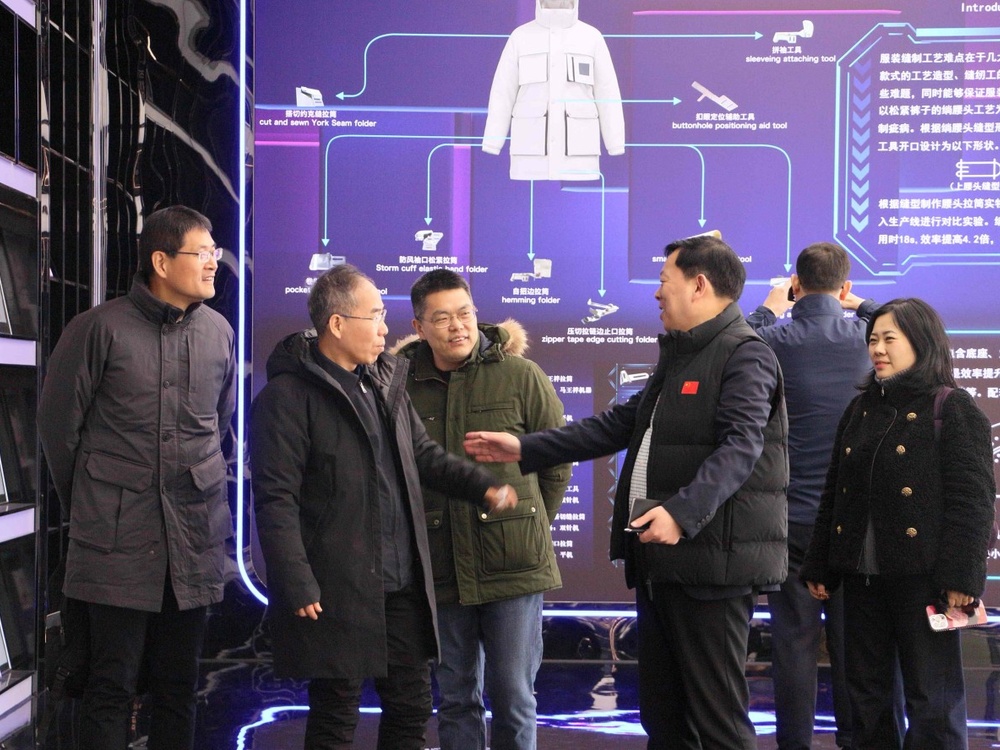
For apparel manufacturers and ODM partners, this means technical capability and design understanding increasingly need to sit in the same development process.
Outdoor Apparel as a Lifestyle Choice
There is also a cultural reason behind the shift.
Many younger consumers who are interested in outdoor culture are not necessarily hiking every weekend.
What they often connect with is the attitude around it: mobility, exploration, functional design, travel and a closer relationship with nature.
Outdoor clothing becomes part of how that lifestyle is expressed.
A technical jacket is no longer only about staying dry.
It can also signal a preference for practical design, versatility and a certain way of moving through the city.
In that sense, outdoor apparel is beginning to follow a path already taken by denim, military clothing and workwear.
All of them started with clear functional purposes.
Eventually, they became permanent parts of fashion.
Outdoor may now be going through the same transition.
What This Means for Apparel Development
For brands, the next stage of outdoor apparel will not be defined simply by higher technical specifications.
Performance still matters. It just no longer tells the whole story.
The stronger products will be the ones that balance performance, comfort, design and versatility in a way that feels natural.
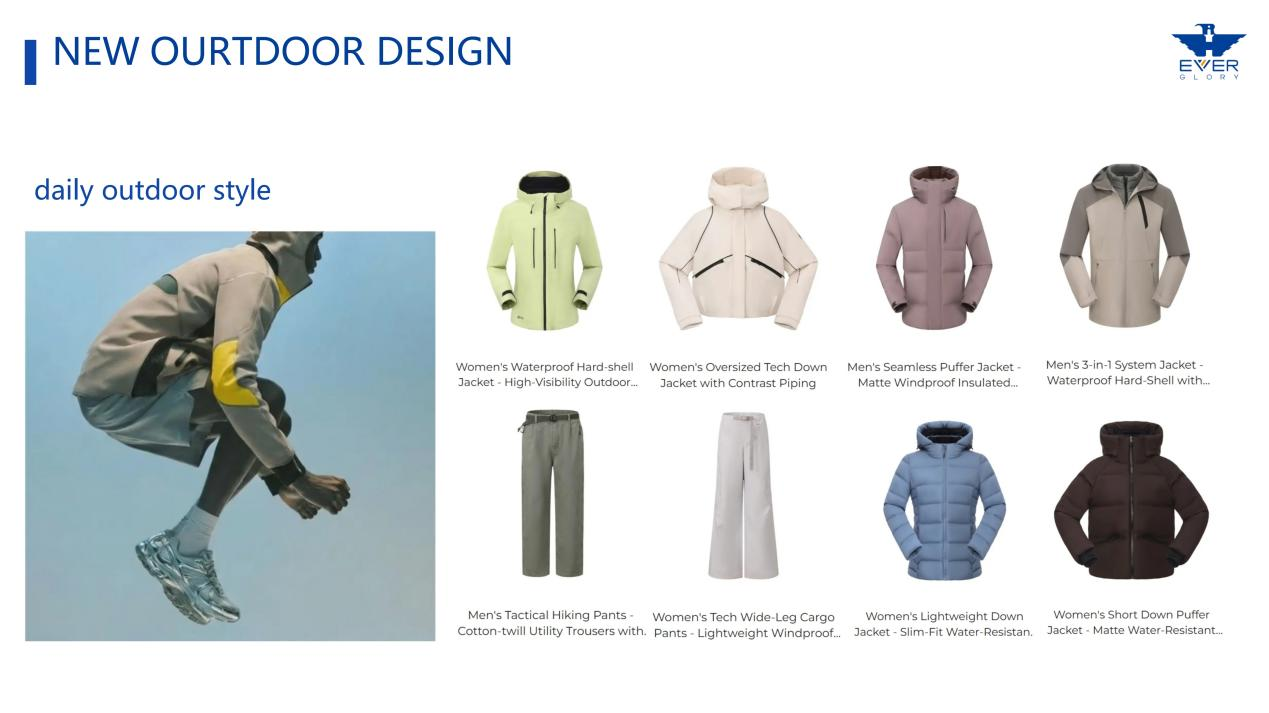
That also changes the role of the supply chain.
In the past, manufacturers were often involved after much of the design work had already been completed.
Today, outdoor and functional apparel development increasingly requires earlier collaboration.
Fabric selection, pattern engineering, technical construction, wearability and visual direction need to be considered together.
This is also the direction Ever-Glory continues to develop as an outdoor apparel ODM partner.
Our experience in both fashion apparel and functional product development gives us a useful perspective on this shift.
The goal is not to make outdoor clothing more complicated.
In many cases, the better product is the one that feels simpler.
It performs when it needs to, but does not look over-engineered.
It works outdoors, but still feels right in the city.
That may be where the next generation of outdoor apparel is heading.
Not toward the mountain or the city.
Toward both.

 EN
EN