When tensions in the Gulf escalated in early 2026, most of the early headlines were about oil, shipping and the Strait of Hormuz.
For apparel brands, especially in sportswear and outdoor, the story was much closer than it looked.
A large share of performance apparel still depends on petrochemical-based materials. That means a shock in energy markets can eventually show up in polyester yarn, technical fabrics, synthetic trims and freight costs.
The chain is not complicated:
Crude oil → PX → PTA / MEG → polyester → fabric → garment
What makes it difficult is the timing.
Oil prices react first. Chemical feedstocks follow. Yarn and fabric prices usually move later. By the time a sourcing team sees a higher fabric quote, the pressure may already have worked its way through several upstream layers.
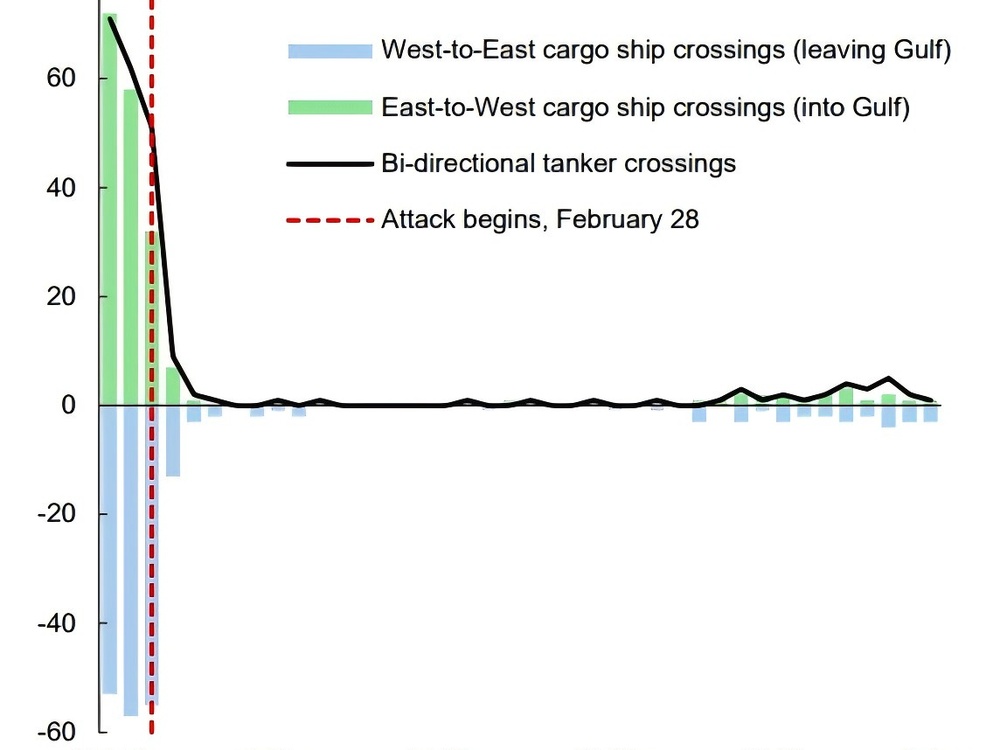
Daily vessel traffic through the Strait of Hormuz fell sharply after the conflict escalated in late February 2026. Source: IMF.
A finished fabric quote rarely tells the whole story.
The real question is whether the pressure is moving downstream
Oil and fabric prices do not move in a straight line.
A rise in Brent does not translate automatically into the same increase in polyester fabric. Inventories, plant utilization, spinning margins, weaving capacity and existing purchase contracts all affect how much of the shock gets passed on.
So the useful question is not simply:
“Did oil go up?”
It is:
“Is the cost pressure actually moving through the material chain?”
That is a more useful signal for product and sourcing teams.
In a volatile market, a brand that watches PTA, MEG and polyester yarn prices can often see the pressure before it reaches the final fabric quote.
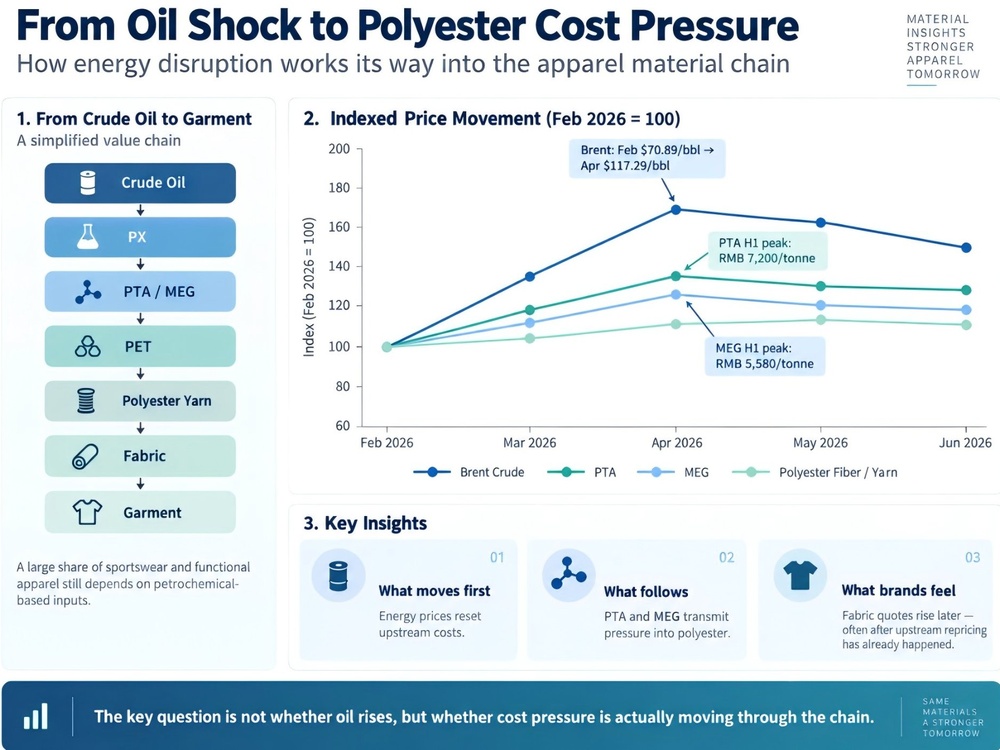
Energy prices move first. PTA, MEG and polyester costs follow with different timing and intensity, creating a delayed but visible pressure on technical fabric costs.
For technical apparel, that matters.
A basic cotton T-shirt has relatively limited direct exposure to petrochemicals. A performance jacket may use polyester or nylon shell fabric, coatings, seam tape, synthetic insulation, elastane, plastic hardware and synthetic thread.
The more technical the garment, the more upstream inputs there are to watch.
The second hit comes from logistics
The Gulf disruption also affected shipping, but not in a simple “freight rates went up everywhere” way.
Some trade lanes moved higher, others were more mixed. Air freight reacted differently again.
The bigger issue was uncertainty.
Fuel cost increased. Insurance became more expensive. Route reliability worsened. Lead times became harder to predict.
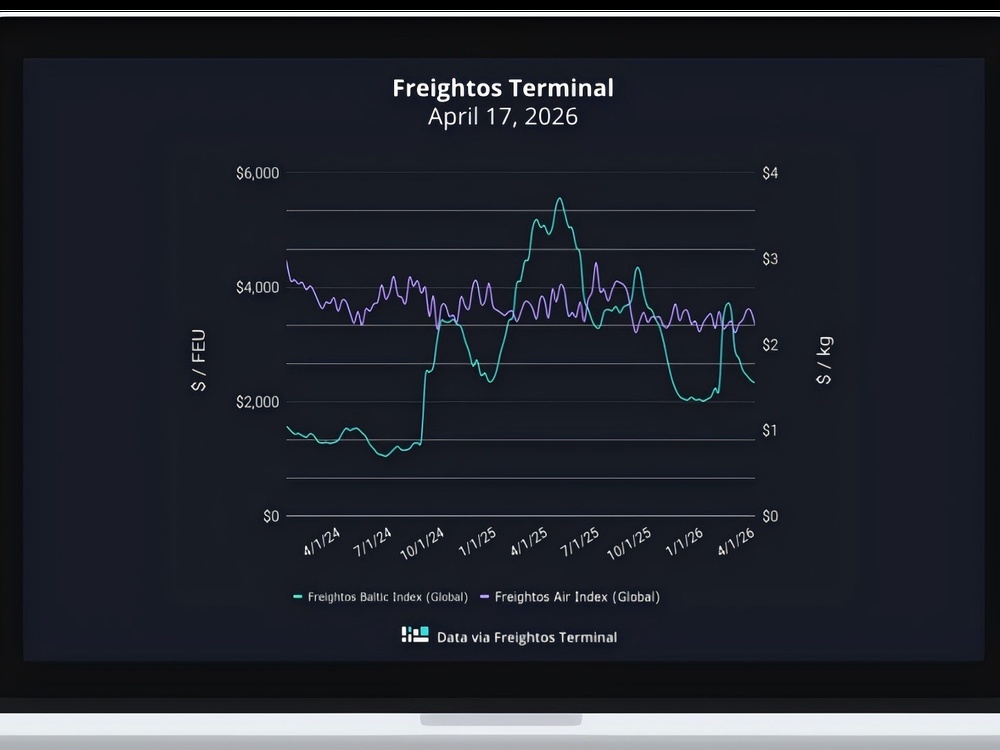
Freight market reactions varied by route, while fuel, insurance and lead-time uncertainty increased across the supply chain.
For apparel, that last point can be more damaging than the freight rate itself.
A jacket that arrives three weeks late can miss part of its selling window.
At that point, a logistics problem becomes a margin problem.
So the impact of a geopolitical event reaches apparel through two routes at the same time.
One is product cost:
Oil → chemical feedstock → fiber → yarn → fabric → trims
The other is delivery risk:
Fuel → freight → insurance → route reliability → lead time → inventory
Both end up in the same garment.
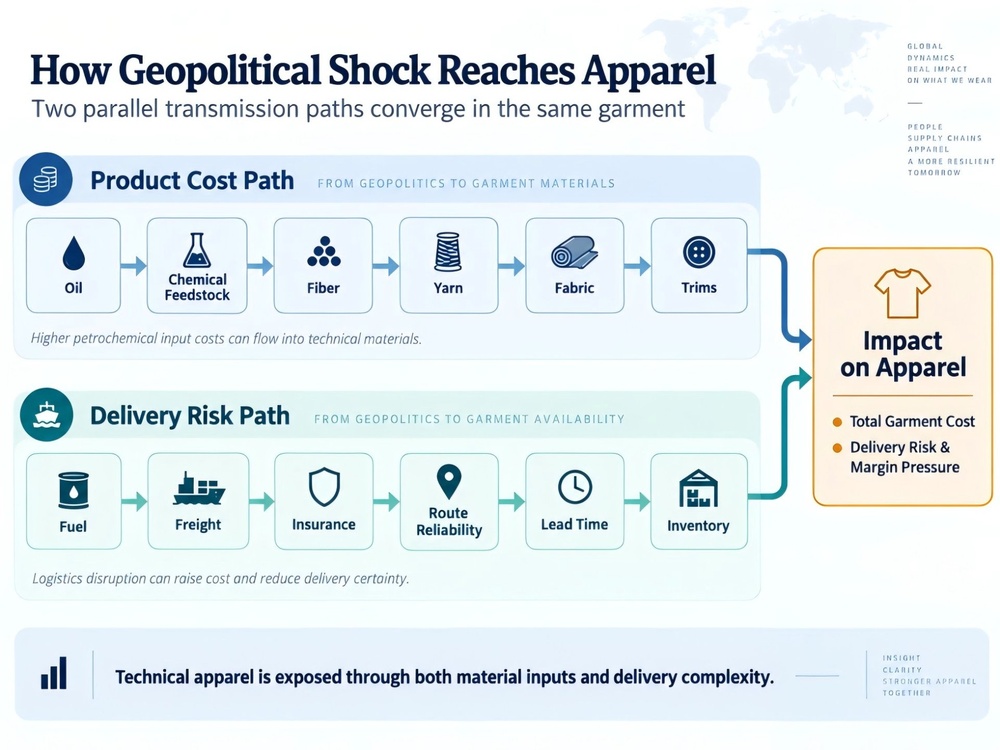
Geopolitical disruption reaches apparel through two parallel paths — material cost and delivery risk — before converging in garment cost, availability and margin.
The answer is rarely as simple as raising prices
When costs rise, the obvious response is to pass them on.
Passing the cost straight to retail is rarely that simple.
If consumer demand is already soft, brands need more options than a higher retail price.
That can mean revisiting fabric specifications, testing alternatives, reserving greige fabric earlier or delaying final color and assortment decisions.
It can also mean looking at sourcing differently.
For years, one of the main questions in apparel was:
Who has the lowest FOB price?
That question still matters, but it is no longer enough.
A supplier that is slightly cheaper may not be cheaper in the end if the entire program depends on one raw-material source, one production country and one shipping route.
The better question is:
What is the real cost once risk is included?
That is a different sourcing mindset.
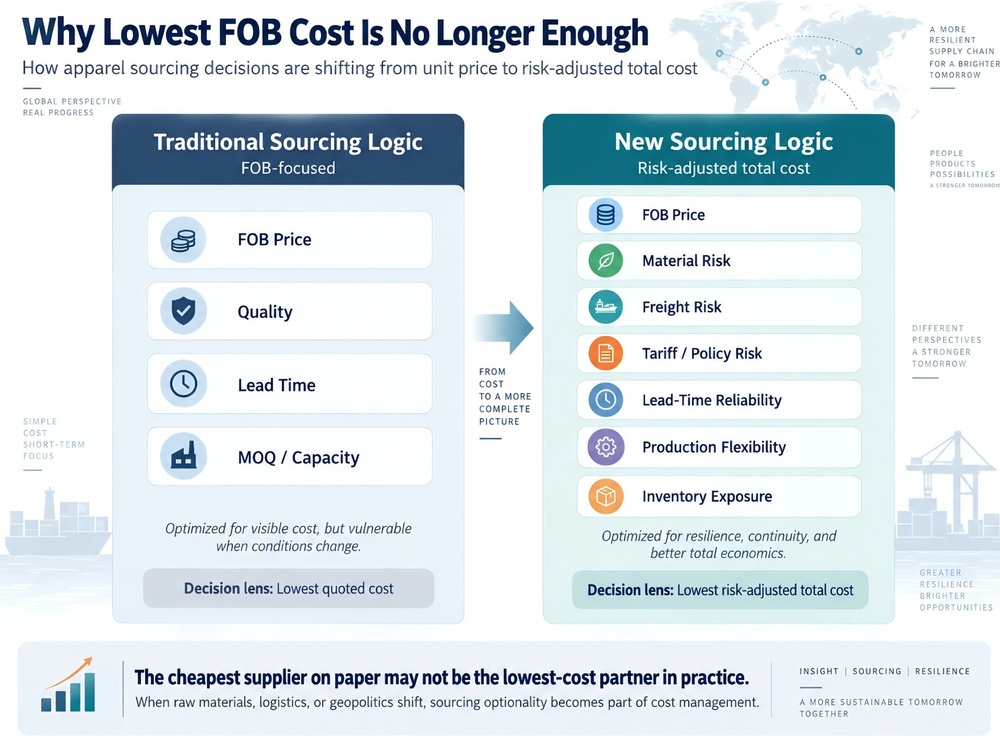
The sourcing decision is shifting from lowest quoted FOB cost toward risk-adjusted total cost, including materials, freight, policy exposure, lead-time reliability and production flexibility.
Resilience does not mean carrying more stock
There is also a broader lesson here.
Apparel supply chains have spent years becoming more efficient.
Less inventory. Fewer suppliers. Longer runs. More concentrated sourcing.
That model works well when conditions are stable.
The last few years have shown how quickly that stability can disappear.
COVID, the Red Sea, tariff changes and now the Gulf conflict all exposed the same weakness: a supply chain can be very efficient and still be fragile.
But the answer is not simply to hold more finished goods.
Fashion already carries too much inventory risk.
A more flexible model is to commit earlier to the things that are difficult to replace, such as key materials and production capacity, while keeping final product decisions open for longer.
In simple terms:
commit early where you must, decide late where you can.
That gives brands more room to react without building unnecessary stock.
The EVER GLORY view
For ODM partners, this changes the role of the supplier.
At EVER GLORY, we work with international brands across multiple development and production locations. That spread is what lets us keep alternatives on the table.
When a material, route or line is disrupted, a second one is usually within reach.
A sharp move in material prices can often be answered with a different fabric route.
An unreliable shipping lane usually has a backup delivery plan.
And when demand shifts late in the season, production can usually be rescheduled another way.
This is particularly important in sportswear, outdoor and functional apparel, where fabric choice, performance requirements and garment construction are closely linked.
This is why we bring suppliers into product development well before the first bulk order.
The earlier a sourcing and development team can look at materials, construction and production options together, the more room there is to react when something changes.
No one can forecast the next disruption.
The practical aim is simpler: keep the product moving when the first plan breaks.
For the brands we serve, the Gulf episode is a concrete lesson — treat material cost and delivery risk as one number, not two.
When those pressures move together, a partner’s real job is to keep the garment in stock and in margin.

 EN
EN