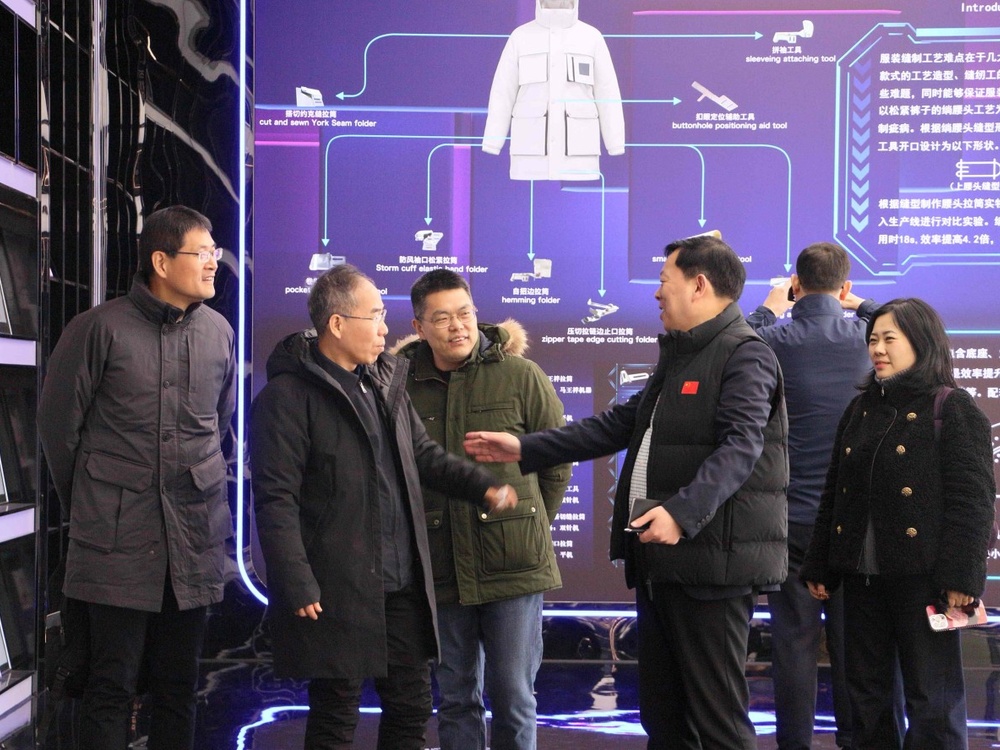
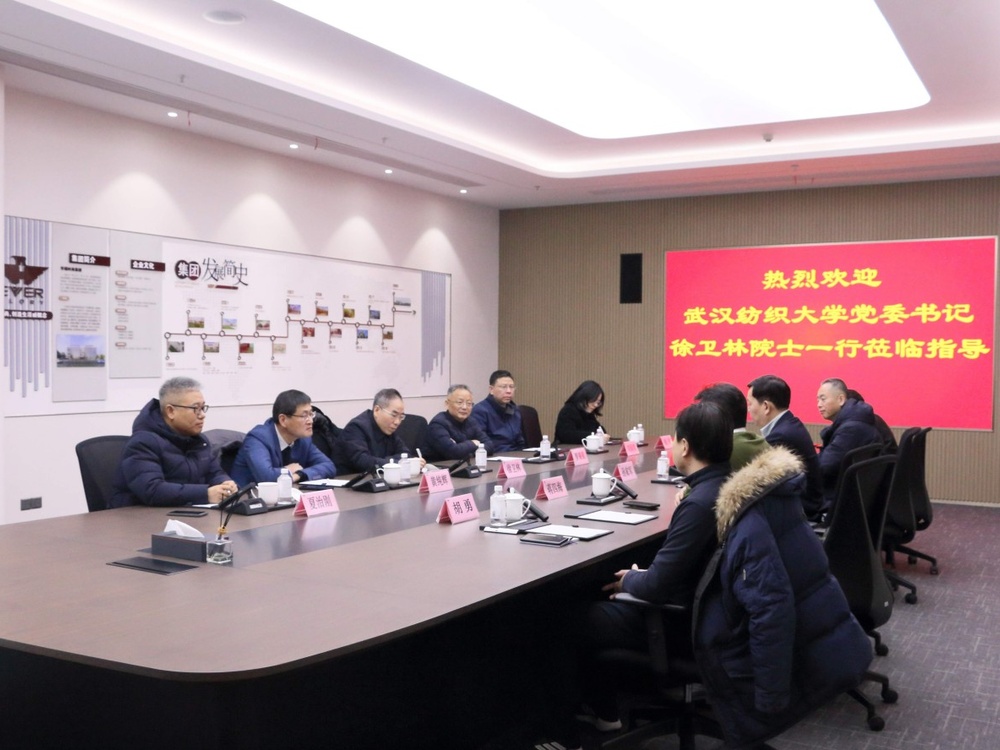
On February 3, Xu Weilin, an Academician of the Chinese Academy of Engineering and Party Secretary of Wuhan Textile University, led a university delegation to Ever-Glory Fashion Group.
Chairman Jack Sun welcomed the group and joined a wide-ranging discussion covering textile innovation, apparel R&D, talent development, artificial intelligence and university-industry collaboration.
Sun talked through Ever-Glory's experience across apparel design, product development, manufacturing, global market expansion and supply chain services, and discussed some of the practical challenges the industry is facing — technology development, talent development and product upgrading.
Drawing on his background in textile research and higher education, Xu shared his view of how the apparel industry needs to change as competition gets tougher. Long-term competitiveness, he argued, can no longer rest mainly on cost efficiency or styling. The textile and apparel sector has to move toward a model built around technology, fashion, sustainability and health.
In his view, brands need to create greater value through material innovation, product technology and stronger cultural expression, while manufacturers and supply chain partners need to invest more deeply in functional materials, fabric engineering, ergonomics and garment performance. The key, he said, is to bring technology into the product itself, rather than treating innovation as an abstract concept.
That direction fits where Ever-Glory has been heading in recent years. As the company grows its sportswear, outdoor apparel and functional apparel ODM business, material innovation, functional fabric development, garment construction and product testing are becoming a bigger part of its product development capability.
AI as a Tool for Better Apparel Development
The conversation also turned to artificial intelligence. Xu noted that AI can meaningfully speed up information research, data organization and early-stage analysis — but real innovation still comes from industry expertise, testing and hands-on experience. For apparel companies, the value of AI is not about replacing designers or engineers; it's about helping product teams work faster, make better decisions and spend more time on higher-value development.
The two sides also turned to talent development. Xu stressed the need for closer university-industry collaboration, especially in giving students and researchers real business and technical problems to work on. Wuhan Textile University, he noted, has been expanding interdisciplinary education, project-based teaching and industry placements for faculty, with the aim of bringing academic research closer to actual market and manufacturing needs.
From Research to Real-World Product Development
After the meeting, the delegation toured Ever-Glory's tool and template R&D center, fabric and trim development center, and apparel design and creative center — a closer look at how the company works across fabric development, production engineering, apparel design and brand services. The two sides also discussed future cooperation in technology research, talent exchange and joint development projects.
At the end of the visit, Xu presented Sun with a basalt-fiber national flag made with the same material technology as the flag displayed during China's Chang'e-6 lunar mission. It was a fitting, tangible example of textile science moving from research into a highly specialized real-world application.
For Ever-Glory, long-term partnerships with universities and research institutions are more than a talent strategy. They're also a way to strengthen capabilities in apparel ODM, functional materials, product development and textile innovation.
The company will keep combining material technology, design expertise and scalable manufacturing to serve global sportswear, outdoor and lifestyle brands with more innovative, commercially relevant product solutions.

 EN
EN