
Pick up a seamless, heat-bonded down or padded jacket and you may notice a dense pattern of tiny holes across the lining film.
At first glance it seems odd. The film blocks wind and holds the insulation in place, so why punch holes in it after lamination?
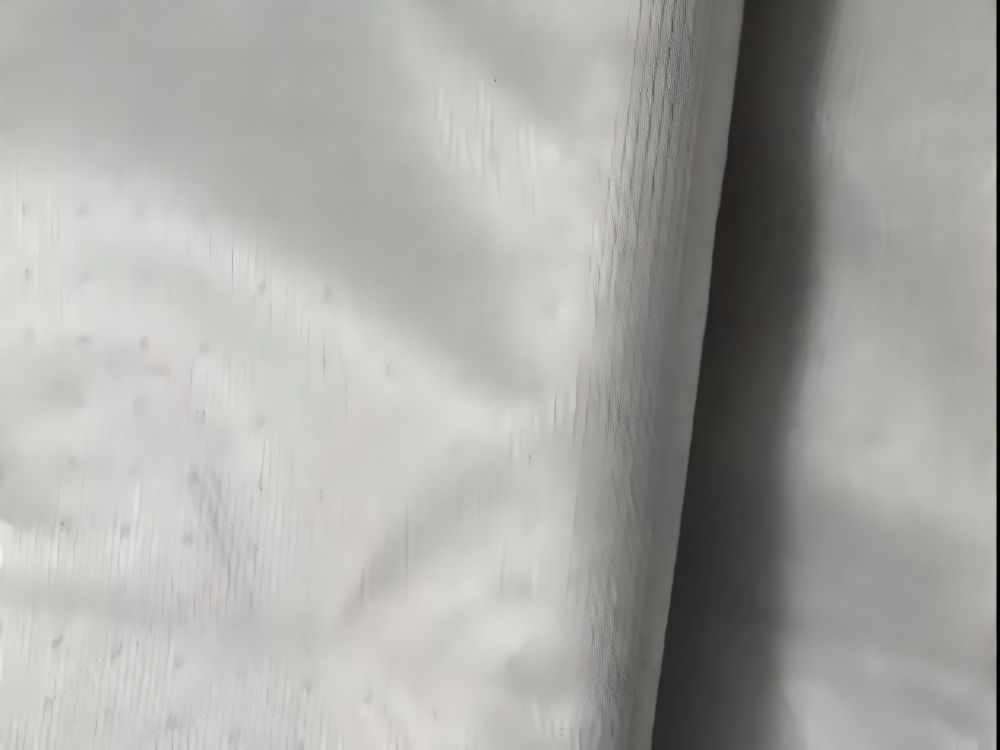
Close-up of micro-perforated film laminated to a finished garment lining.
The answer is a balance: keep the fill contained, but let moisture, pressure and comfort work as they should.
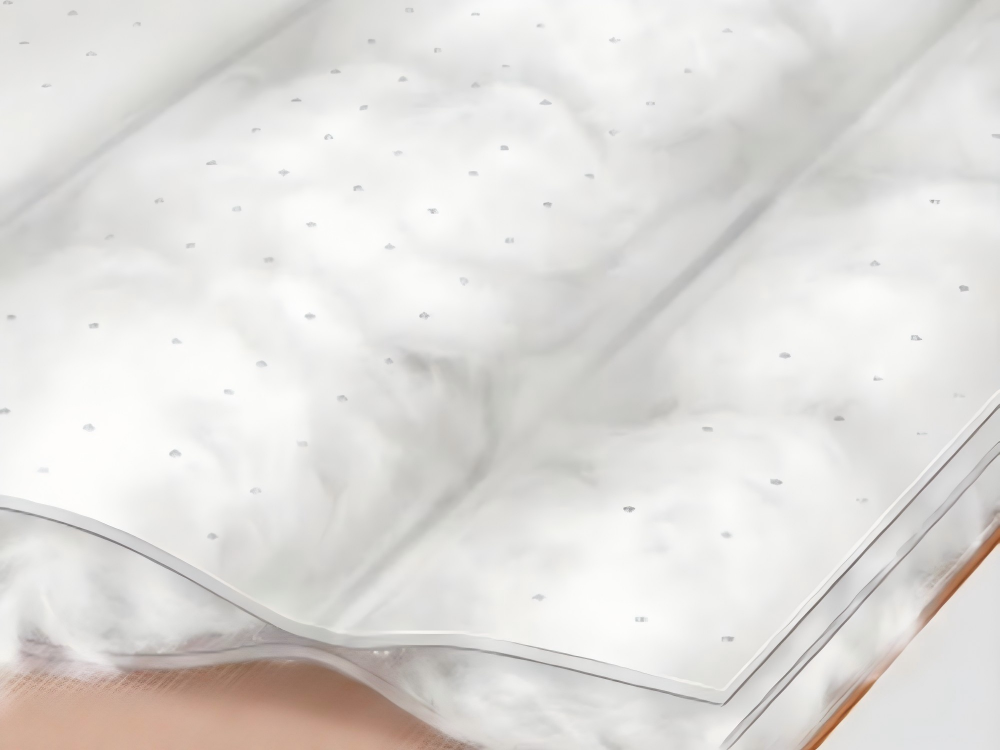
The perforated film allows air and vapor to move while helping keep the insulation in place.
Why Laminate a Film and Then Perforate It?
In conventional stitched construction, needle holes become escape routes for down and synthetic fill. Heat-bonded, direct-fill construction lowers that risk and gives the garment a cleaner, more technical look.
But the process creates a new problem. For the hot-melt adhesive or TPU film to bond well, the shell and lining need a fairly airtight surface. Leave the laminated lining fully sealed, though, and the finished jacket traps moisture and air.
Micro-perforation resolves the trade-off. The film keeps its barrier function, and the controlled openings deliver four practical benefits.
The body gives off moisture even during light activity. In a fully sealed garment, that vapor collects inside the insulation chamber, leading to condensation and a damp, clammy feel.
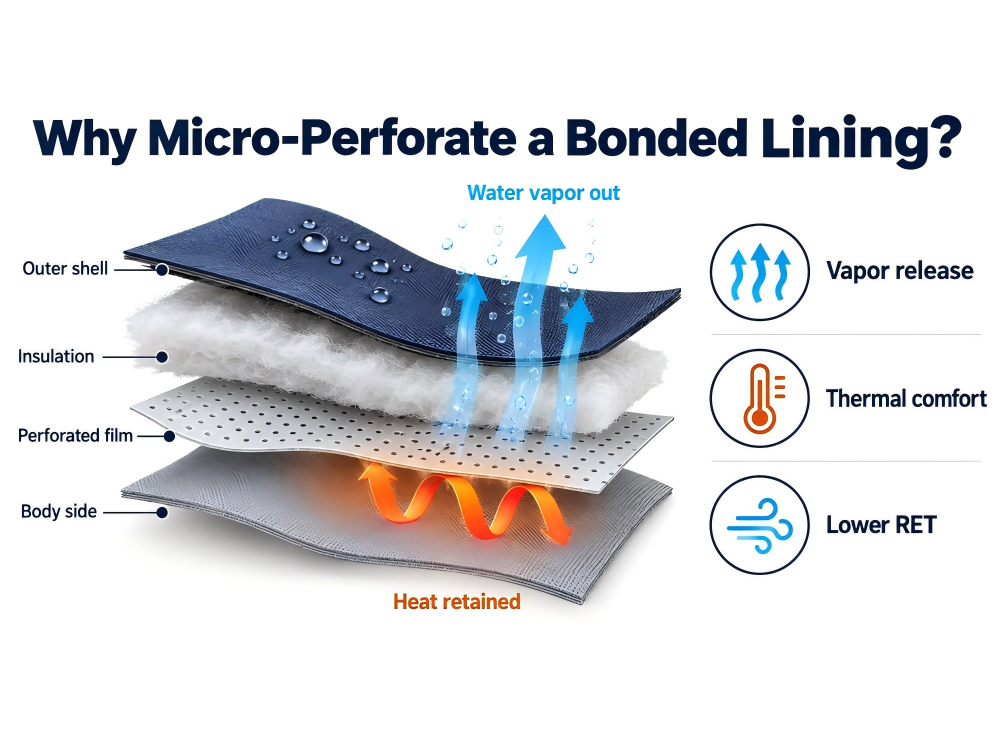
Layered construction: vapor exits through the perforated film while the insulation retains warmth.
Micro-perforations give vapor a controlled route out of the garment. The inside stays drier, and the insulation keeps its warmth without the sealed-in feeling. In testing terms, the aim is lower water-vapor resistance, or RET, while the required barrier performance holds.
The perforation pattern is engineered, not random. Hole size, spacing, film thickness and lamination quality are specified together so that air and vapor can pass while the fill stays put.
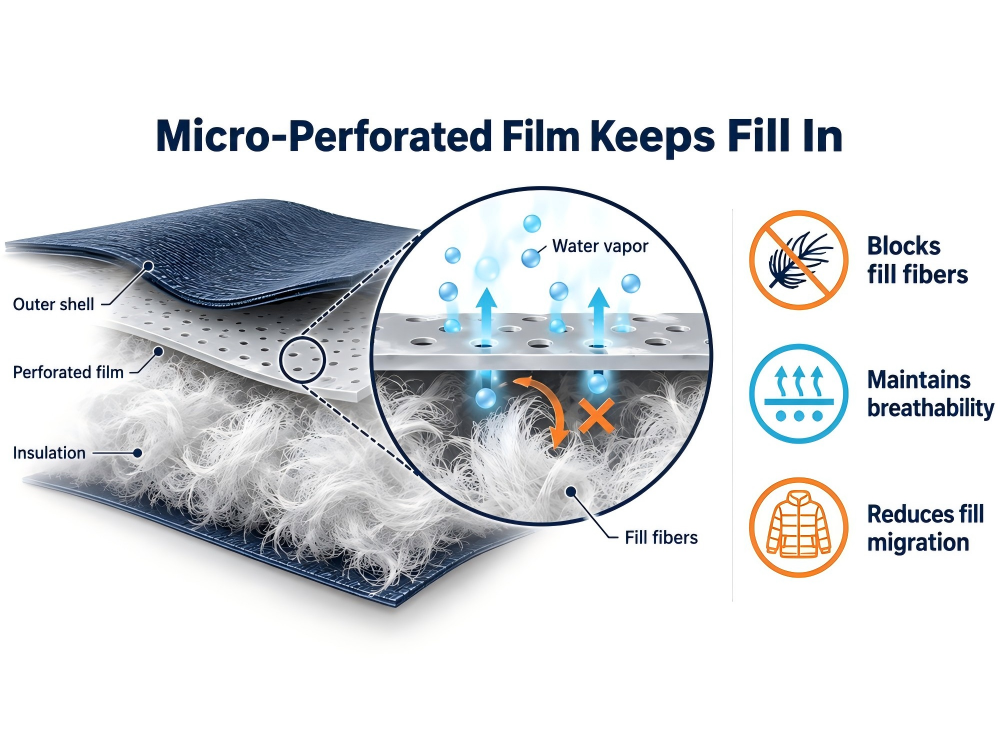
The film allows air and vapor to pass while helping contain down and synthetic insulation fibers.
The lining stays breathable without losing the down-proofing and fill control you expect from a bonded construction.
A bonded jacket behaves like a row of semi-sealed chambers. Without a pressure-release path, those chambers can become unstable during production and everyday wear.
During production, filling equipment pushes insulation and air into each chamber. If the air cannot escape fast enough, the lining balloons and puts unnecessary stress on the bonded edges.
The same thing happens in use when the jacket gets compressed — sitting in a car, for instance. Repeated pressure cycles strain the bonded structure. Micro-perforations let air equalize quickly, so the garment recovers its shape and the seams carry less long-term stress.
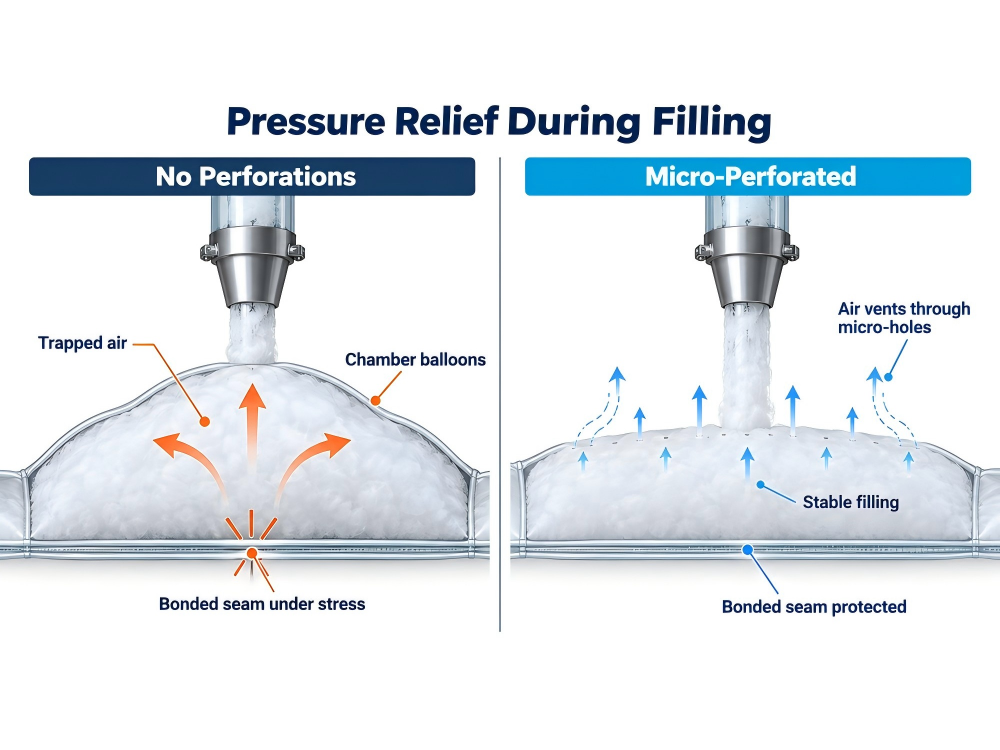
During filling, micro-perforations release trapped air and reduce stress on bonded seams.
Laminated fabrics can feel stiff, and the layers rubbing together make a noticeable plastic rustle. Both the sound and the feel can undercut the quality of an otherwise premium jacket.
A regular perforation pattern breaks the film's continuous surface tension. The lining turns more flexible, drapes more naturally and makes less noise as the wearer moves.
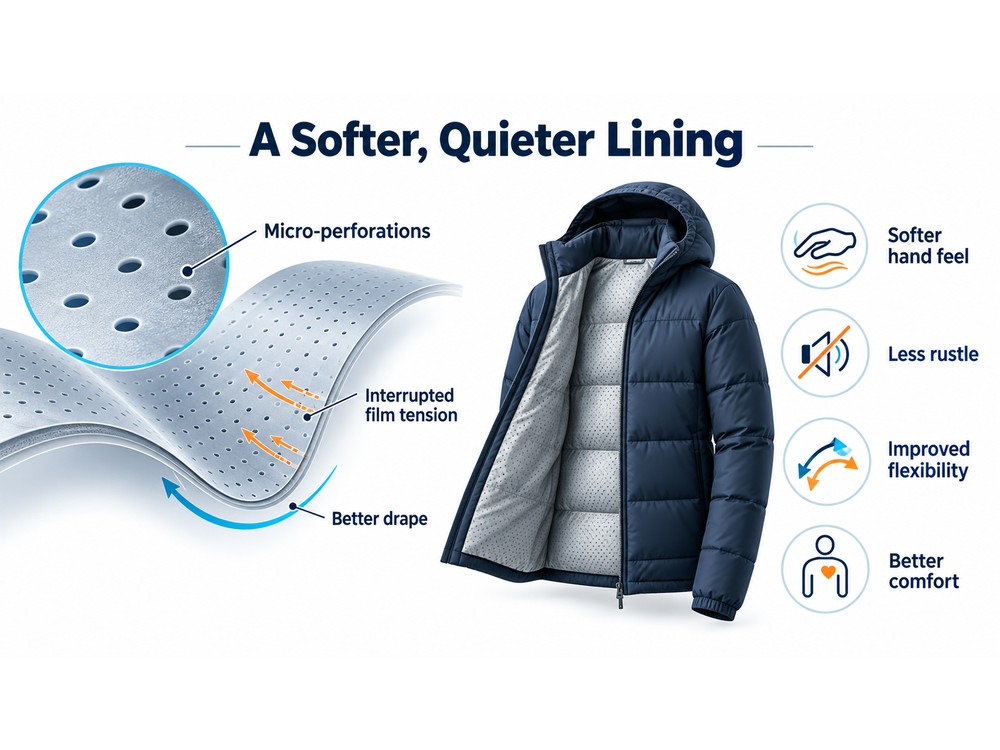
Regular perforation improves softness, drape, flexibility, and acoustic comfort.
These tiny holes are not a cosmetic afterthought. They belong to the garment's ventilation and pressure-management system, helping a bonded jacket stay warm, breathable, fill-resistant, comfortable and structurally stable.
When we evaluate this construction, we start with hydrostatic head and RET, then check perforation consistency, bond strength, fill migration and performance after washing. Buyers and designers should review the same points against the garment's intended end use.
For your next insulated outerwear program, which specification carries the most weight: weather protection, breathability, fill containment, or hand feel?
Originally published in Chinese by the EVER GLORY Technical Team. English edition revised for international readers.

 EN
EN