Introduction: Ultra-lightweight down jackets sell because they pack small and hold warmth, but the shells are unforgiving to sew. The thin, high-density fabrics (10D/15D nylon or polyester) tend to pucker at the seam and let down escape through the needle holes.
Ever-Glory's sewing team has spent years tuning parameters and materials to control both faults. What follows is the set of six controls we use on the line to keep seams flat and down in.
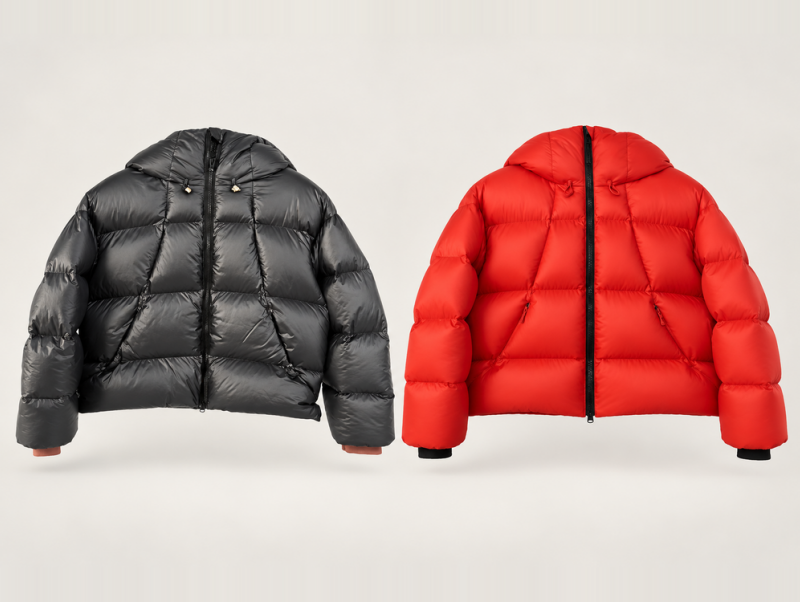
Black sample: visible surface unevenness and seam puckering. Red sample: the smoother appearance targeted by the six production controls.
Ultra-Fine Down-Proof Fabric: Lightweight fabrics (10D–20D) require smooth handling. Ensure the fabric has a high-density weave and proper down-proof coating (AC/PU coating or cire finish).
High-Elasticity, Fine Threads: Heavy threads cause structural displacement in thin fabrics, leading to structural puckering. Use 100% spun polyester or continuous filament polyester threads (e.g., Ticket 120–150 / Tex 18–24). Thin, high-strength threads minimize thread consumption per seam and reduce tension-induced puckering.
Needle Size: Standard needles easily damage delicate fibers, creating visible needle holes that cause down migration. Use ultra-fine needles (Size 65/9 to 75/11 or DBx1 / KN type).
Needle Point Type: Switch to a Light Ball Point (SES) or Medium Ball Point (SUK) needle. Instead of piercing through the fabric yarns, ball-point needles push the fibers aside, preventing yarn rupture, reducing tension, and eliminating puckering.
Needle Replacement Frequency: Replace needles regularly (e.g., every 4–6 hours of continuous sewing) to prevent burrs or dull tips from snagging fine threads.
Balanced Thread Tension: Excessive thread tension is the primary cause of tension puckering. Keep both needle thread tension and bobbin tension as low as possible while maintaining a clean, balanced stitch lock.
Presser Foot Pressure: Reduce presser foot pressure to the minimum required level to prevent fabric drag and surface impression marks.
Feed Dog Pitch & Height: Use fine-tooth feed dogs (fine pitch) to ensure smooth fabric movement without marking or over-feeding the bottom layer.
Stitch Density (SPI): Set stitch density appropriately—typically 12–14 stitches per inch (SPI) for lightweight down apparel. Too high a stitch density weakens the fabric structure and causes severe puckering; too low compromises down-proof seam performance.
Flat Handling & Tension-Free Feeding: Operators should allow the machine feed system to move the fabric naturally without pulling or pushing the material manually.
Pre-Sewing Testing & Sample Validation: Always conduct seam puckering tests and down-proof seam evaluations (including tumble tests) on pre-production swatches before launching full assembly line production.
On the line, the six controls reinforce each other: thin high-strength thread, fine ball-point needles changed often, low balanced tension, light presser-foot pressure, fine feed dogs at 12–14 SPI, and a pre-production puckering and tumble test. Get those right and the seam stays flat while the down stays inside.
Building an ultra-light down programme with Ever-Glory
Ever-Glory is an OEM/ODM outerwear maker. We can take an ultra-light down project from fabric and thread specification through to a validated down-proof seam, using tools such as 3D sampling where they help.
If you want to review a factory sample or talk through the sewing specification for your next down line, contact our technical team.

 EN